
design IMPACT
Timeline
2023.9-2023.12
ROLES
Product Designer
teams
Individual Project
tools
Figma, Protopie, Adobe Creative Suite, Procreate
Design Process
Identifying the Most Frustrating Apple Native Apps Through Research
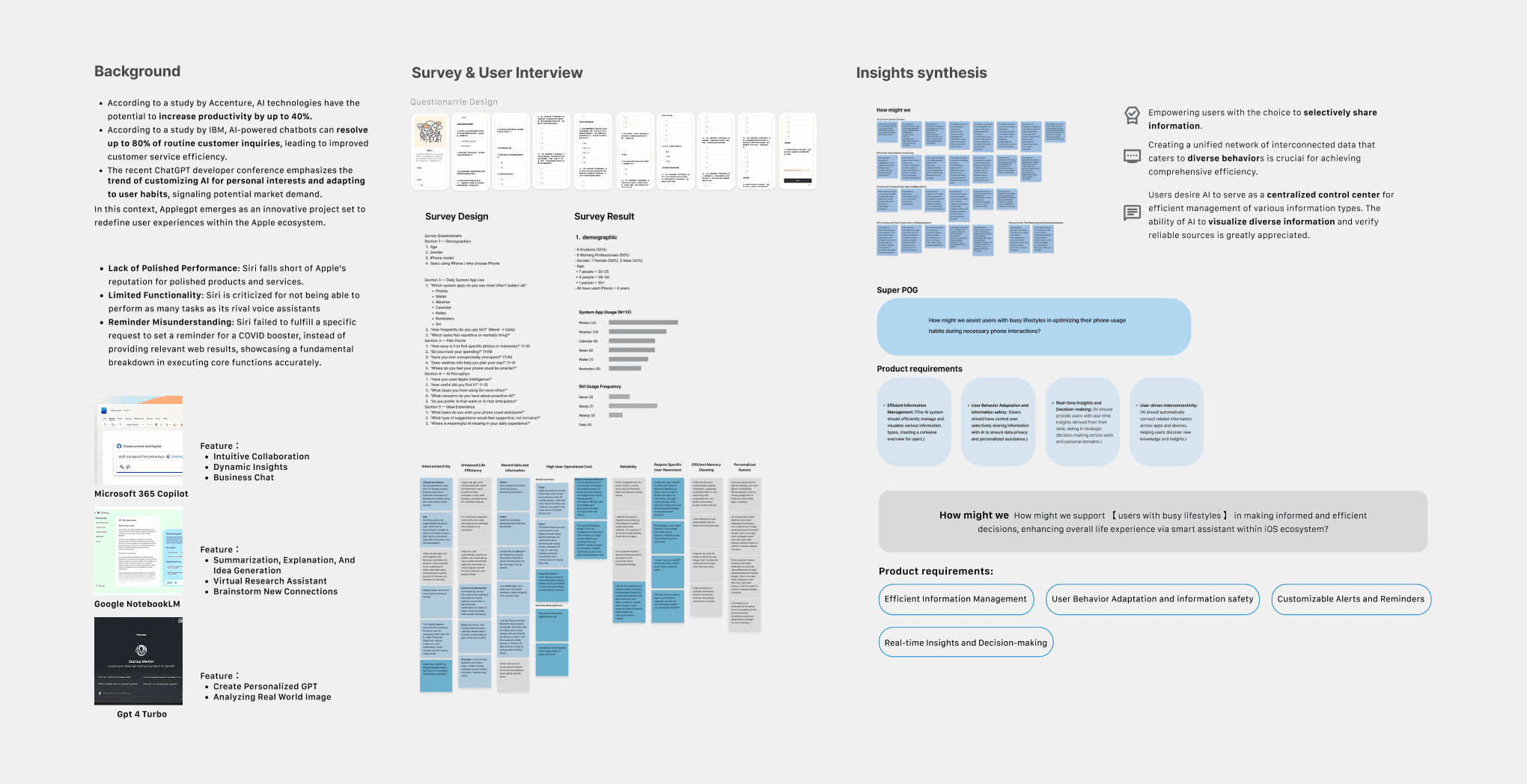
I first surveyed over 100 students and working professionals to identify the Apple native apps that created the most friction in everyday life. Photos, Wallet, and Weather emerged as the most frequently mentioned products. To uncover the root causes behind these frustrations, I conducted 30+ follow-up interviews and synthesized insights through affinity mapping. The research revealed four recurring needs: easier memory retrieval (68%), better spending visibility (61%), more actionable weather guidance (57%), and proactive support for daily decision-making (54%). Together, these findings pointed to an opportunity to transform Apple's native apps from passive tools into intelligent, context-aware companions.
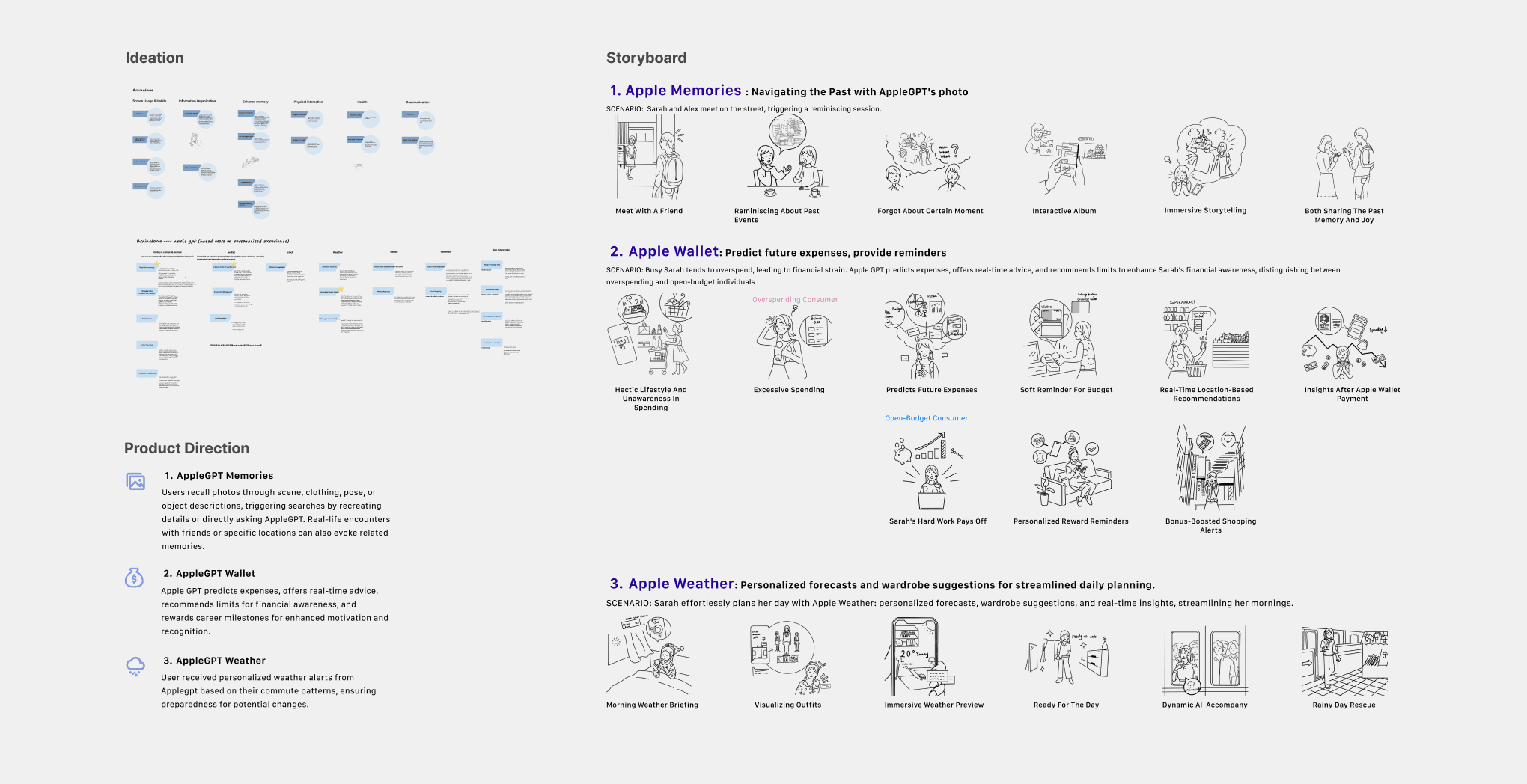
Using Storyboards to Identify Opportunities in Everyday Scenarios
Rather than jumping directly into interfaces, I used storyboards to imagine how AI could support users during everyday moments—meeting an old friend, commuting to work, managing expenses, or preparing for unexpected weather changes. This process helped uncover opportunities for proactive memory retrieval, financial coaching, contextual weather assistance, and intelligent reminders that adapt to user behavior.
Translating Insights into User Flows and AI Interactions
I translated storyboard concepts into detailed user flows, defining how AI could integrate naturally within existing Apple experiences. Through low-fidelity wireframes, interaction mapping, and visual explorations, I designed workflows that balanced proactive assistance with user control while maintaining Apple's familiar design language.

Bringing the Vision to Life Through Prototyping and User Testing
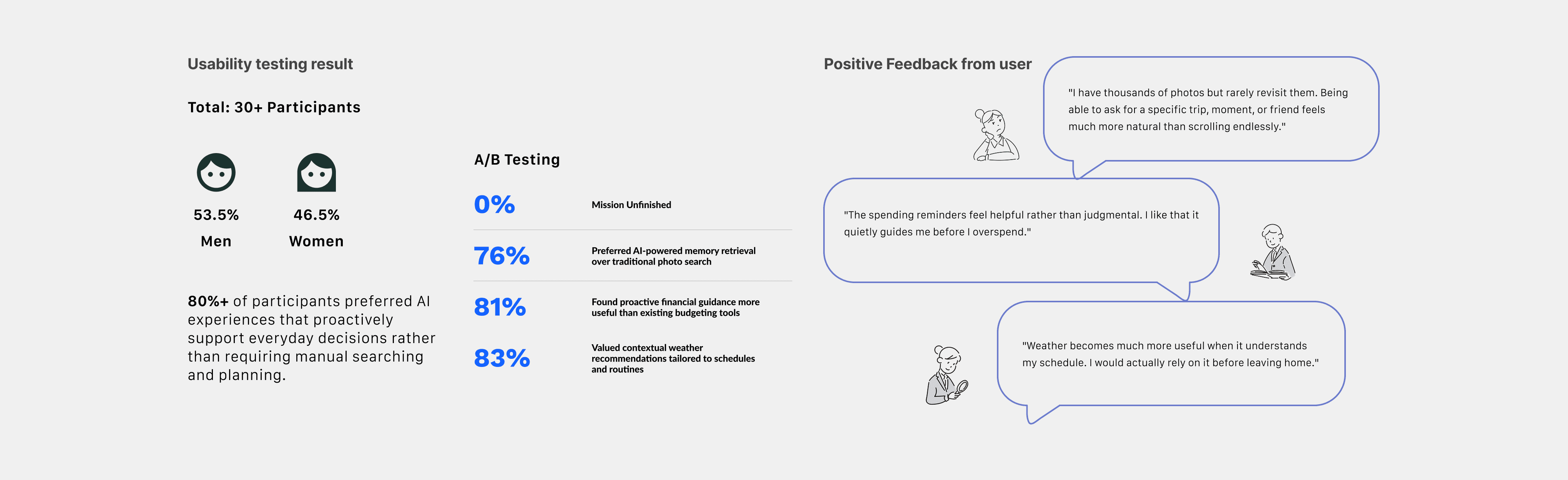
Through concept validation sessions with 30+ participants, 76% of users preferred AI-assisted memory retrieval over traditional photo search, 81% found proactive spending insights more helpful than existing budgeting tools, and 83% valued weather recommendations tailored to their schedules and routines. The testing also revealed that transparency and user control were essential for building trust in AI-powered experiences, directly informing the final onboarding and interaction design.
